
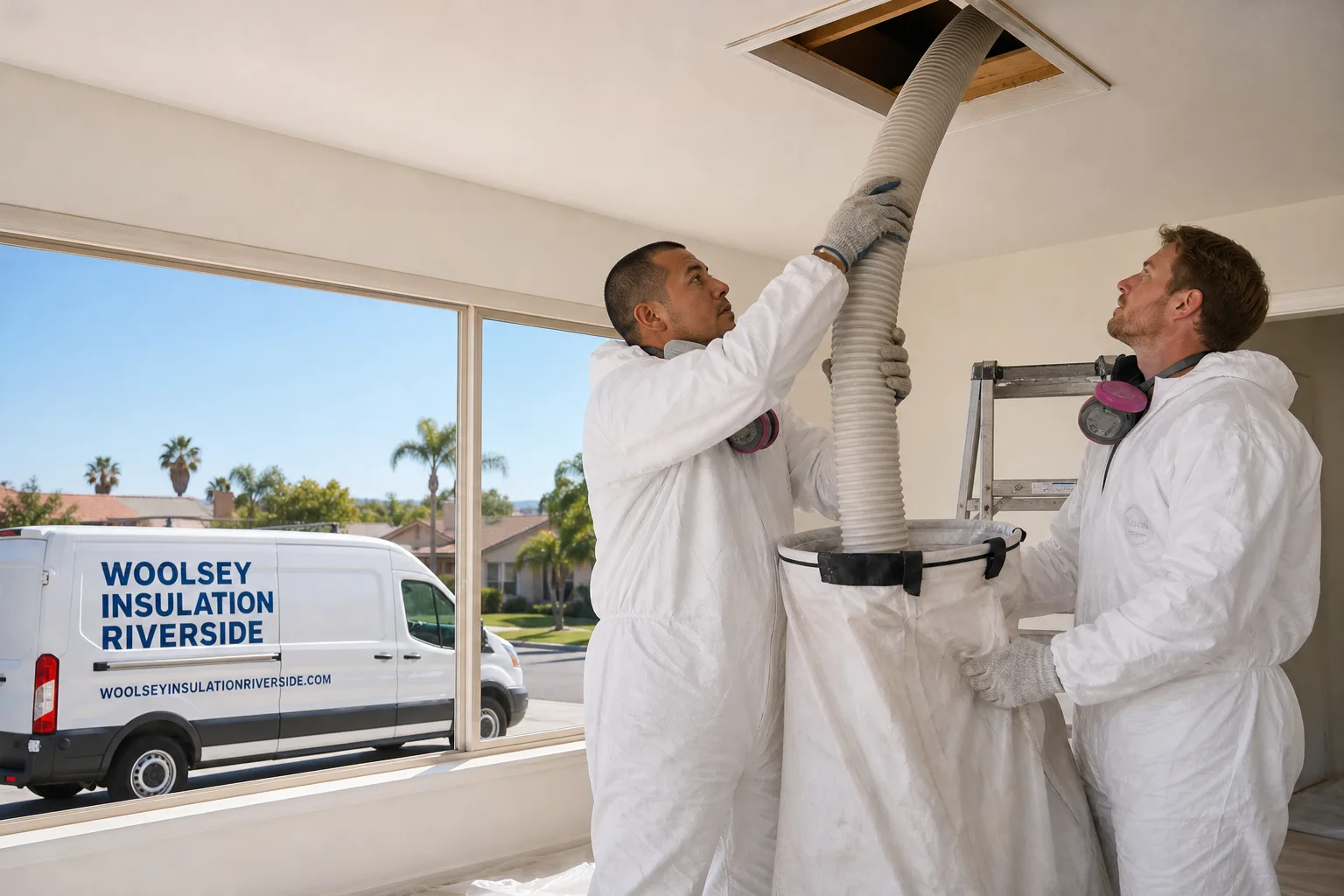
Fast, Reliable Attic Insulation Across Crestline
Attic insulation in Crestline runs $1,800 to $6,500 for most full-attic retrofits on the mountain’s older cabins and A-frames, with top-ups on newer homes landing between $900 and $2,200. We give you the exact written number before any work starts, not after we open up your attic. If you’re in Crestline off Lake Drive or up in Cedar Pines Park, call (831) 263-0387 and a real person answers, day or night.
This page covers what actually matters up here: the mountain-code insulation playbook for legacy cabins, honest pricing for Crestline’s market, and how to stop ice dams, frozen pipes, and ember entry in one pass. No generic attic advice. Just the specifics that apply when you live at 4,700 feet with snow on the roof and wildfire season at your door.
Why Woolsey Insulation Riverside Is Crestline’s Preferred Attic Insulation Company
We’re the Attic Insulation team that shows up when we say we will, with a written price already in your hand. Crestline homeowners tell us the same story: another contractor quoted one number over the phone, then found “unexpected problems” at the door. That doesn’t happen with us. Glenn Hartley leads our crews, and the Kingswell Guarantee backs every job: a written price before work begins, a committed arrival window, a clean job site, and a written guarantee on the work. If it’s not done right within 365 days, we come back and fix it at no charge.
We work in Crestline regularly, not occasionally. Our dispatch and scheduling run from the brand’s Inland Empire office, and crews serve Crestline locally, which means we’re not guessing at drive times or treating your cabin like a valley tract home. We know what a 1950s rock-wool attic looks like, what pine needle debris does to batt insulation, and where ice dams form on A-frame roofs. That local knowledge changes the quality of the work.
Insulation Contractors in Crestline
Insulation Contractors in Crestline handle something most valley companies never see: retrofitting seasonal cabins built before insulation codes existed, often with no attic access and framing layouts that fight standard batt installation. When your 1960s A-frame still has the original 1-inch fiberglass batts or compressed rock wool doing nothing to stop thermal transfer, you need a crew that understands mountain housing stock. Most full retrofits in Crestline run $1,800 to $6,500 depending on attic size, access type, and whether we’re air-sealing and removing old material.
Blown-in and batt retrofits for legacy cabins
Older Crestline cabins often need a combination approach: closed-cell spray foam to air-seal top plates and knee walls, then blown-in fiberglass or cellulose to hit R-49. We work with Owens Corning, Knauf, and GreenFiber materials so the recommendation fits your framing, not whatever happens to be on the truck.
Attic top-up for newer full-time homes
If your home was built after 1990, you may just need a top-up to reach current mountain code. Top-ups in Crestline typically run $900 to $2,200. We still air-seal first, because even newer attics leak heat through can-light penetrations and unsealed top plates.
Attic Ventilation in Crestline
Attic Ventilation in Crestline is not optional, especially with the snow loads you get at 4,700 feet. Ice dams form when attic heat melts snow on the roof and the water refreezes at the eaves. Proper rafter vents and cross ventilation keep the roof deck cold enough to stop that cycle. Ventilation upgrades, including baffle installation and vent replacement, typically run $400 to $1,800 in Crestline depending on roof pitch and whether we’re cutting in new gable vents. You get the written number before we touch anything.
Rafter vents and ice dam prevention
Most older A-frames here have zero rafter vents, which means every winter the same thermal cycle plays out. We install Owens Corning rafter vents before blowing in insulation so air moves from soffit to ridge. That’s the difference between a roof that holds snow and one that leaks into your ceiling.
Ember-resistant venting for wildfire season
Crestline’s high wildfire danger means gable vents and soffit-to-attic gaps need to be sealed or screened against ember entry. Pin needle debris packed into cavities for decades becomes kindling. We address venting and sealing together so the insulation job also hardens your home against ember intrusion.
Trusted Brands We Service in Crestline
We’re not tied to one material brand, and that matters in Crestline because a 1920s cabin and a 2015 full-time home need different products. We install and service Owens Corning, Knauf, and GreenFiber among the eight leading brands we carry, which means the recommendation comes from your home’s framing, access, and snow load, not from whatever is stacked in a warehouse. Each brand has a specific strength: GreenFiber’s blown-in cellulose fills irregular A-frame cavities tightly; Owens Corning rafter vents handle ice dam prevention; Knauf’s Jet Stream ULTRA hits high R-values even in tight framing. If a brand’s product fails under warranty, we come back within 365 days and make it right at no charge.
Common Attic Insulation Problems We See in Crestline Homes
- Ice dams from original 1-inch batts. 1920s cabins with untouched attics have essentially zero thermal barrier. Snow melts from interior heat, refreezes at the eaves, and water backs up under shingles.
- Pine needle debris and rodent nests destroying R-value. Decades of mountain living leave attics packed with needles, dust, and pack rat nests. Old batt insulation compressed under that weight tests at R-9 instead of R-30. We remove it and start clean.
- No attic access or only a small scuttle. Many older Crestline cabins have no attic hatch, just a 14-inch scuttle. We access through gable ends or roof cuts, then install permanent access so future maintenance is possible.
- Ember entry through unsealed soffit gaps. Wildfire embers don’t need open flame; they need a gap and dry debris. Sealing soffit-to-attic transitions and screening vents closes that pathway while we’re insulating.
Pricing for Attic Insulation in Crestline, CA
Here’s what we tell every Crestline homeowner before we schedule anything: attic top-ups on newer homes run $900 to $2,200; full retrofits on legacy cabins with old material removal, air-sealing, and blown-in insulation run $1,800 to $6,500; ventilation-only work with rafter vents and gable vent replacement runs $400 to $1,800. What moves the number is attic size, access difficulty, how much old material we’re removing, and whether you’re in a standard gable-roof cabin or a steep A-frame with knee walls. You get the exact written price before any work starts, and that price doesn’t change at the door. Call (831) 263-0387 for a free estimate.
We Also Serve Cities Near Crestline
Our crews cover Crestline and the surrounding mountain communities, with regular service to Bloomington, Colton, Fontana, and Grand Terrace as well. If you’re on the mountain full-time or splitting your week between the hill and the valley, we can coordinate scheduling around your availability.
Serving Crestline, CA - Our Local Coverage Area
We’re based in the Crestline area and know this community well. Use the map below to see our service coverage - if you’re nearby, we can almost certainly help.
FAQs About Attic Insulation in Crestline
Yes, in most cases. Rock wool batts from that era compress heavily, especially when pine needle debris and rodent activity have settled into them, and they typically test at R-9 or lower. Blowing new insulation over compressed old material doesn’t restore R-value, and it can trap moisture against your framing. We remove the old material, air-seal the top plates, and install new insulation to R-49. Call (831) 263-0387 and we’ll put the exact scope and price in writing before any work begins.
Crestline requires R-49 or higher in most new and retrofit attic work, driven by mountain snow loads and freeze-thaw cycles at 4,700 feet. That’s higher than what’s enforced in nearby valley cities like San Bernardino or Rialto, where the same attic might only need R-38. If you’re in Crestline and a contractor quotes valley-code insulation, that’s a red flag. We spec every job to mountain code, in writing.
No, skipping ventilation on a snow-load roof in Crestline will create ice dams. Attic heat rises, melts snow at the ridge, and the water refreezes at the cold eaves. Insulation without ventilation makes that cycle worse. We install rafter vents and balance soffit-to-ridge airflow before or alongside every insulation retrofit. It’s one pass that solves heat loss and ice dam formation together.
We access through gable ends or roof cuts when there’s no standard attic hatch, which is common in Crestline’s 1960s and 1970s A-frames. Once we’re in, we remove old material, air-seal, install insulation, and put in permanent access so future inspection or maintenance doesn’t require cutting again. The written estimate covers whatever access method your framing requires.
Yes. Insulation alone doesn’t stop embers, but the air-sealing we do alongside insulation closes the soffit-to-attic gaps and unsealed penetrations where embers find dry pine needle debris. We can also screen gable vents during the job. It’s insulation and ember hardening in one pass, which matters a lot at this elevation. Call (831) 263-0387 for a free estimate and we’ll explain exactly what your attic needs.
Written by Glenn Hartley, Owner at Woolsey Insulation Riverside, serving Crestline and the surrounding mountain communities.