
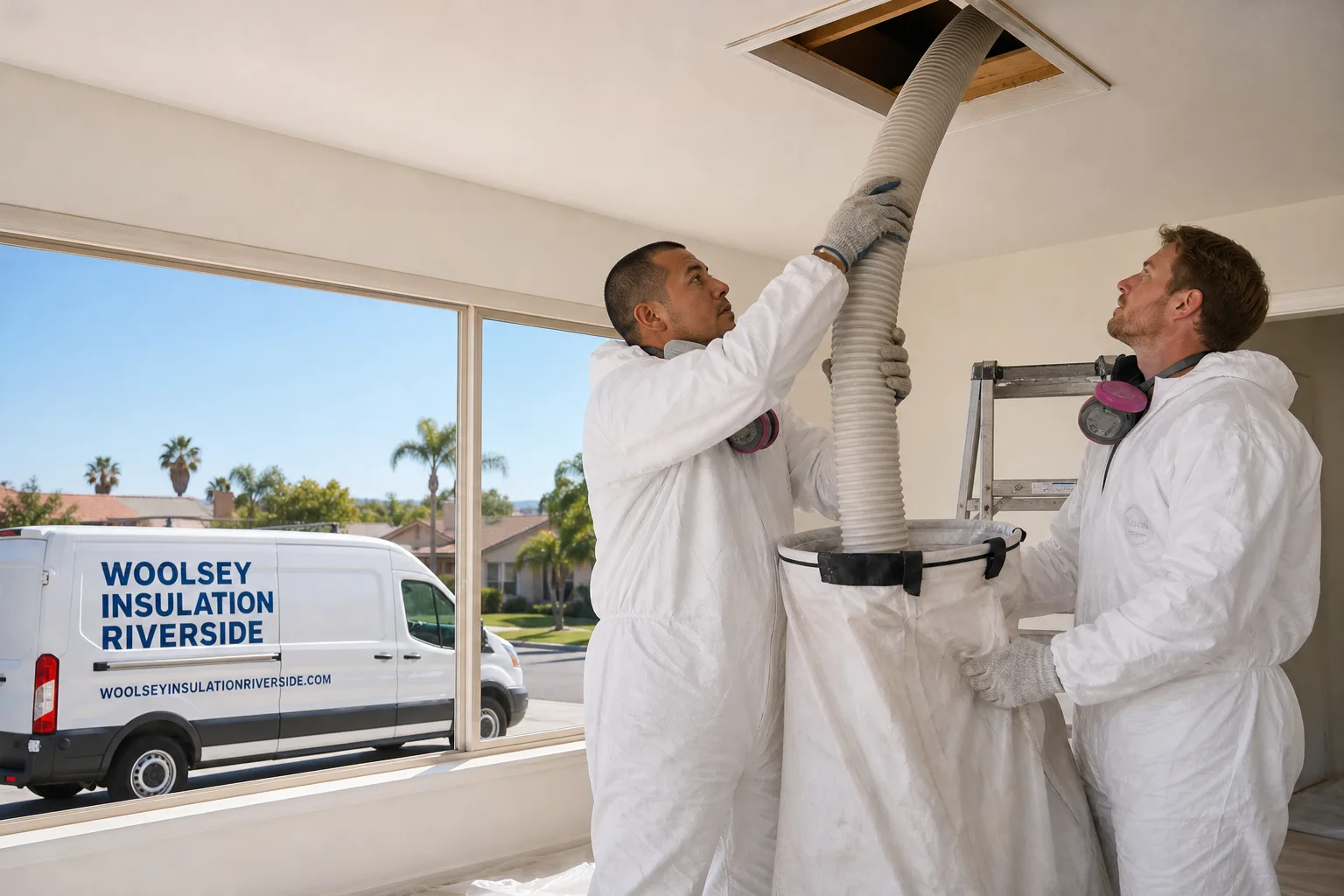
Fast, Reliable Attic Insulation Across Temescal Valley
Attic insulation in Temescal Valley typically costs $1,800 – $4,600 for a full retrofit in a 1,500 – 2,200 sq ft home, and most jobs are completed in a single day. The valley’s inland heat means a poorly insulated attic can hit 140°F in August, and that heat pushes straight down into your living space. We’re the local crew that shows up fast, gives you a written price before any work starts, and puts the guarantee on paper. Call (831) 263-0387 for a free estimate.
Why Woolsey Insulation Riverside Is Temescal Valley’s Preferred Attic Insulation Company
Homeowners across Temescal Valley keep calling us back because we do one thing and we do it right: attic insulation and spray foam. No HVAC, no roofing, no sideline trades. Glenn Hartley leads our crew, and he’s built the team around a simple idea from the Kingswell Guarantee: a written price before work starts, a real arrival window, a clean job site, and 365 days of written accountability after. In a trade where callbacks go to voicemail and prices shift at the door, that’s rare.
We know the 1990s stucco and wood-frame homes off Temescal Canyon Road better than most. We know which ones got R-19 ceilings under older codes. We know where the batts have settled, where the rodents got in, and what it takes to fix it properly. When you call, a live person answers 24/7. Not a phone tree. Not a call-back window. You tell us what’s happening in your attic, and we’ll give you an honest read on what it’ll take and what it’ll cost.
Insulation Contractors in Temescal Valley
Insulation contractors in Temescal Valley come in two flavors: generalists who’ll take any job that pays, and specialists who know attics like the back of their hand. We’re the second kind. We install and service attic insulation and spray foam only. That narrow focus means our crews know exactly how heat moves through a Temescal Valley attic in August, exactly where the air leaks hide, and exactly what material fits your house rather than whatever’s sitting on the truck.
For a typical 1990s-era home in this valley, a full attic air-seal and blow-in upgrade runs $2,200 – $4,600. A simple top-up over existing batts on a smaller home can run $1,200 – $1,900. We give you the exact written number before any work begins, every single time.
Blown-In Cellulose and Fiberglass
Blown-in insulation, whether GreenFiber cellulose or Owens Corning fiberglass, fills every corner and crevice that batts can’t reach. That matters in Temescal Valley, where a single uninsulated gap at an eave or can light lets hot attic air pour into the bedroom below. For homes built with only R-19 ceilings, we typically blow R-38 to R-49 over the existing layer once the top plates are air-sealed.
Batt Replacement for Rodent-Damaged Attics
In a lot of the valley’s 1990s builds, fiberglass batts have been chewed, nested in, and sodden for years before anyone notices. When that’s the case, topping up over the mess just buries the problem. We pull the damaged batts, clean and sanitize where needed, then install fresh Knauf batt or blow-in to current Title 24 levels.
Attic Ventilation in Temescal Valley
Attic ventilation in Temescal Valley does more than just move hot air out. It protects the insulation itself. When a valley attic sits at 140°F with no airflow, the heat radiates down through the ceiling and bakes your ductwork all summer. Then in a cool winter night, condensation forms on the underside of the roof deck and starts degrading whatever insulation you have. Proper intake and exhaust balance is what lets insulation actually do its job.
For a typical Temescal Valley home, adding or correcting attic ventilation runs $450 – $1,400 depending on the existing roof vents, eave configuration, and what’s already in place. We include ventilation prep on most full insulation retrofits because adding R-38 to a poorly vented attic is like running a marathon in a plastic bag: you can do it, but it’s working against itself.
Baffle Installation and Eave Airflow
Older valley homes often have eave vents blocked by insulation that got pushed too deep or blown in carelessly years ago. We install baffles first, then blow insulation to the proper depth. That keeps the airflow path open from the eave to the ridge, and it keeps your insulation from getting wind-washed and losing R-value.
Ductwork Protection in Hot Attics
In an August Temescal Valley attic, the ductwork itself can hit 130°F or more before the AC ever kicks on. Insulated flex ducts help, but the real fix is lowering the attic temperature through air sealing, proper R-value, and balanced ventilation. Our crews look at the whole system, not just the insulation layer.
Trusted Brands We Service in Temescal Valley
We don’t push one brand because we got a deal on it. We work with eight leading manufacturers, including Owens Corning, Johns Manville, Knauf, and GreenFiber, so the material recommendation fits your home and your valley’s climate rather than whatever happens to be in the warehouse that week. For the hot, dry Temescal Valley attic, we often recommend GreenFiber cellulose for its air-sealing properties and Owens Corning or Knauf batts for walls and vaulted ceilings. We keep stock staged for quick turnaround on Temescal Valley jobs, so a scheduled retrofit doesn’t sit idle waiting for material to arrive from a distribution center across the county.
Common Attic Insulation Problems We See in Temescal Valley Homes
- Settled and rodent-damaged 1990s batts: The original fiberglass batts in many valley homes have compacted to half their rated depth, and rats and squirrels have torn through them for nesting. The result is large bare patches at the eaves and around can lights that let attic heat press straight into the living space.
- R-19 ceilings under old energy codes: Builders along Temescal Canyon Road in the 1990s and early 2000s were only required to meet older Title 24 standards, and R-19 ceiling insulation was often the cheapest compliant option. That’s less than half of what current code expects, and it cannot keep up with a 140°F attic.
- Trapped attic heat baking the ductwork: When ventilation is poor and insulation is thin, the attic turns into an oven. The ductwork inside that oven picks up the heat, which means your AC has to fight both the attic gain and the duct gain before it ever sees the temperature at the thermostat.
- Air leaks at top plates and recessed lights: In wood-frame construction, the gaps where interior walls meet the ceiling and where can lights poke through are open channels for hot attic air. Most 1990s builds in this valley have never been air-sealed, and that’s the single biggest source of summer discomfort and high August bills.
Pricing for Attic Insulation in Temescal Valley, CA
Here’s what we tell homeowners in Temescal Valley before they ever see a truck in their driveway. A full attic retrofit on a 1,500 – 2,200 sq ft stucco home, including air sealing at top plates and can lights, baffles, and blown-in R-38, runs $2,200 – $4,600. A top-up over intact, undamaged existing insulation on a smaller home starts around $1,200. Attic ventilation corrections range $450 – $1,400. These are the written numbers. Before any work starts, you get the exact price on paper and it doesn’t change at the door. Call (831) 263-0387 and we’ll walk through what your attic actually needs and what it will cost.
We Also Serve Cities Near Temescal Valley
Our crews regularly run jobs in Riverside, Ontario, Rancho Cucamonga, and Fontana, so if you’re right across the valley line or have family in a neighboring city, the same crew that knows Temescal Valley attics can help. See our full Attic Insulation service details for what we cover across the region.
Serving Temescal Valley, CA - Our Local Coverage Area
We’re based in the Temescal Valley area and know this community well. Use the map below to see our service coverage - if you’re nearby, we can almost certainly help.
FAQs About Attic Insulation in Temescal Valley
Because when those developments were built in the 1990s and early 2000s, R-19 was the cheapest way to meet the Title 24 energy code then in effect. Builders installed the minimum, not the maximum. Today’s code calls for roughly double that in an attic, and the difference shows up every August when those attics hit 140°F and the AC runs nonstop. The fix is a top-up or full retrofit to R-38 or R-49, and the cost in Temescal Valley typically runs $1,200 – $4,600 depending on home size and condition. Call (831) 263-0387 for your exact number.
Rodents don’t just nest in insulation. They compress it, tear it apart, and urinate and defecate throughout it, and once fiberglass batts are sodden and matted, their R-value collapses. A batt that started at R-19 can functionally be R-8 or less in the damaged areas. In a valley home where summer attic temperatures already exceed 140°F, those bare and damaged spots become open pathways for heat. The damaged material has to come out before new insulation goes in.
If the existing batts are dry, intact, and haven’t been rodent-damaged, yes. We can air-seal the attic first and then blow cellulose or fiberglass right over the top. That’s typically the most economical path and a big chunk of the top-up work we do in Temescal Valley. If the old batts are water-damaged, moldy, or chewed through, they come out first. Adding clean insulation over contaminated or collapsed material just covers up a problem that will keep degrading.
When an attic in this valley climbs above 130 – 140°F, your AC is no longer just cooling the house. It’s also fighting the heat radiating down through the ceiling and the heat soaking into the ductwork. That’s when homeowners see the system running continuously and the thermostat still climbing in the late afternoon. The permanent fix is air sealing plus adequate insulation plus balanced ventilation, so the attic temperature drops and your AC only has to cool the living space, not the whole attic.
Yes. A day in this valley might swing 30 or more degrees from pre-dawn to mid-afternoon, and that cycle causes air pressure differences between the attic and the living space. Warm, humid indoor air gets drawn up through every gap at top plates, can lights, and the attic hatch, and then condenses on the cooler roof deck at night. Over years, that moisture saturates insulation and promotes mold. Proper air sealing is what stops the cycle, and it’s why we do it on every retrofit we install in Temescal Valley.
Written by Glenn Hartley, Owner at Woolsey Insulation Riverside, serving Temescal Valley and surrounding communities.