
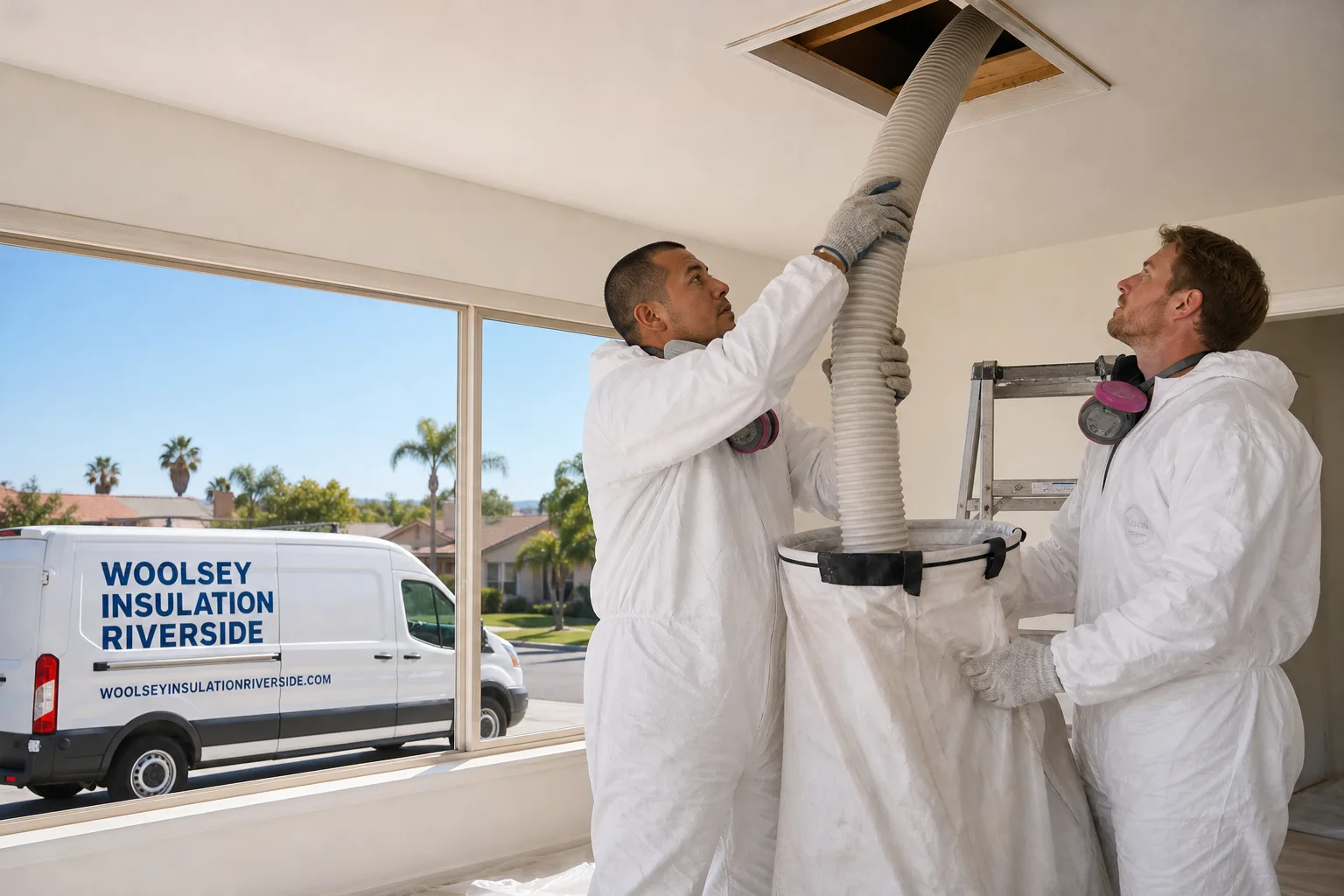
Fast, Reliable Spray Foam Insulation Across Crestline
Spray foam insulation in Crestline typically costs $4,200 to $9,800 for a full attic and roof deck retrofit, and most jobs in the mountain communities here are completed in one to two days. We schedule crews into Crestline four days a week from the Inland Empire office, which means most calls get a work crew on-site within 48 hours during the fall and spring shoulder seasons. If you’re in a drafty A-frame off Lake Drive or a 1960s cabin near Cedar Pines Park, call (831) 263-0387 for a written price before any work starts. That’s how every Woolsey job runs, and it’s a promise we put on paper.
Crestline isn’t like Redlands or Fontana. The elevation changes what insulation has to do, how it’s installed, and how fast it pays for itself. We know the difference between a snow-load winter and a Santa Ana October, and our crews work around both.
Why Woolsey Insulation Riverside Is Crestline’s Preferred Spray Foam Insulation Company
Crestline homeowners keep calling us back because we answer the phone at 2 a.m. when a January freeze has a pipe sweating inside an exterior wall, and because we hand over a written price before anyone touches a canister of foam. No door-step revisions, no “we found something extra” add-ons. The number you’re quoted is the number on the invoice. That’s the Kingswell Guarantee, and it’s been the backbone of our work since 2002.
Our technicians are background-checked and arrive in uniform. You’ll know who’s walking through your door, and they’ll know what they’re looking at: old-growth pine framing, shiplap interiors, scuttle holes the size of a microwave. Glenn Hartley leads the Woolsey Insulation Riverside crew, and he’s the one who signs off on every Crestline spray foam job, whether it’s a rim joist seal in a 1950s cabin or a full roof deck application in a newer build off Highway 138.
We handle spray foam and attic insulation only. That focus means we don’t get pulled off your job to go quote a roofing replacement or HVAC repair. You get a crew that does one thing, all day, every day, and does it right. When a Crestline homeowner asks us about ember sealing or ice dam prevention, we can talk shop without glancing at a brochure.
Spray Foam Attic Insulation in Crestline
Spray foam attic insulation is the single most effective upgrade for a Crestline cabin that’s leaking heat through a roof deck. In a mountain house, the attic is more than storage space: it’s the barrier between your living room and a snow load that wants to melt, refreeze, and creep under shingles. We spray open-cell or closed-cell foam directly onto the underside of the roof sheathing, sealing every rafter bay edge-to-edge so warm air stops escaping through cracks and nail holes. A typical full attic application in a Crestline home runs between $4,200 and $8,700, depending on square footage and whether we’re cutting new access through a gable end or working from an existing hatch.
For Crestline homeowners, attic foam fixes the two things that matter most in a mountain freeze: ice dams and cold ceilings. When the roof deck is sealed, snow melts evenly instead of in streaks, and the rooms below stay warm without running a wall heater around the clock.
Roof Deck Sealing for Ice Dam Prevention
A roof deck that isn’t air-sealed edge-to-edge is the number one cause of ice dams we see in Crestline. Heat sneaks through gaps in the sheathing, melts the snow on top, and sends water down to refreeze at the eaves. Closed-cell foam applied at 3 inches across the full deck stops that heat loss at the source. It also adds structural strength to older trusses that have taken decades of snow load.
No-Attic-Access Work Through Gable Ends
Many Crestline cabins built between the 1920s and 1970s have no attic door at all, or just a small scuttle you can barely fit a ladder through. We’ve done dozens of these jobs by cutting a clean access panel through the gable end, spray foaming the roof deck, then buttoning the opening back up with trim that matches the original siding. You’d never know we were in there, except for the heating bill.
Spray Foam Wall Insulation in Crestline
Spray foam wall insulation in Crestline means retrofitting cavities that were never designed for insulation, often in old-growth pine framing that’s settled unevenly over eighty years. We inject foam into exterior wall cavities from the interior or exterior, depending on access and finish, and the foam expands to fill every irregular gap that fiberglass batts leave open. For most Crestline homes, spray foam wall insulation runs from $3,100 to $7,200 for a full exterior wall retrofit. The exact written price comes before any work starts, every time.
When we’re in the walls, we’re not just adding R-value. We’re air-sealing the gaps that let embers and smoke get pulled into the living space during wildfire season. Closed-cell foam is a genuine barrier against ember intrusion, especially in the rim joist and soffit zones where most mountain homes leak air.
Rim Joist Sealing for Freeze Protection
The rim joist is the wood band that runs around the top of your foundation wall where the floor joists sit. In Crestline’s January freezes, cold air pours through this unsealed gap and chills the floor, the walls, and any pipes running alongside exterior framing. Sealing the rim joist with closed-cell spray foam stops that air movement completely. It’s a one-day job, usually $1,800 to $3,400 for an average cabin footprint, and it’s the most cost-effective freeze protection you can add to an older home.
Ember Sealing at Wall and Soffit Junctions
During wildfire season in Crestline, wind-driven embers don’t just land on the roof. They get sucked into the small gaps where soffits meet walls, and into every plumbing penetration and electrical chase that wasn’t sealed decades ago. Spray foam closes those entry points. Our crews inspect every exterior junction and inject foam into any gap larger than a pencil. It’s not a fireproofing system, but it’s a real layer of defense that older insulation never gave you.
Trusted Brands We Service in Crestline
We work with eight insulation brands and stock the ones we find most reliable for mountain retrofits. For these walls, we like Demilec closed-cell for roof decks, Owens Corning foam for rim joists, and Johns Manville for occasional open-cell wall applications. The brand choice is never about what’s on the truck that day; it’s about what the house needs, the climate it lives in, and the framing it was built with. If you’re in Crestline and a previous material has failed, we can match the new foam to the existing building without ripping everything out. We keep stock for Crestline jobs on hand because waiting a week for a canister to arrive from a distributor doesn’t help you when the nights are dropping into the twenties.
Common Spray Foam Insulation Problems We See in Crestline Homes
- Foam pulling away from old plank sheathing. Legacy cabins with uneven, hand-milled timber sheathing don’t give foam a clean, continuous substrate. Over time, open-cell foam can detach in spots, leaving thermal gaps that let cold air reach pipes along exterior walls. We prep old sheathing by removing loose debris and, where needed, use closed-cell foam that has higher adhesion strength on irregular wood.
- Rodent damage to fresh foam. In cavities where pine needles and old squirrel nests weren’t fully removed, rodents chew through open-cell foam within weeks, restoring air leaks and cutting R-value. We vacuum every cavity before spraying, not just the easy ones. If we find an active middens, that gets cleaned out first. No foam goes in over debris.
- Recurring ice dams after a partial foam install. If only some rafter bays get sprayed, the heat loss through the unsealed ones still melts snow unevenly, and ice dams come back the next winter. The only fix that lasts is an edge-to-edge roof deck application, which is why we always quote the full deck, not a partial patch.
- Drafty walls from original construction. Many 1930s-1950s cabins in Crestline have walls that were never sealed at the sole plate or top plate. You can’t fix that with batt insulation shoved into a wall cavity. The foam has to reach those junctions to stop the air movement, and that takes a crew that’s comfortable working in tight, irregular framing.
Pricing for Spray Foam Insulation in Crestline, CA
Here’s what spray foam insulation costs in Crestline, in real dollar ranges. A full roof deck and attic application on a typical 1,200-square-foot cabin runs $4,200 to $8,700. Full exterior wall retrofits run $3,100 to $7,200. Rim joist sealing runs $1,800 to $3,400. Garage ceiling spray foam runs $1,900 to $4,600. A complete attic plus walls package on an older A-frame can reach $10,000 to $14,000, but that depends on access difficulty, debris removal, and whether we’re cutting new gable-end access. Every Crestline job gets a written price before we start, with every line item spelled out. No vague allowances, no “to be determined” anywhere on the estimate. Call (831) 263-0387 and we’ll walk your specific cabin through the pricing in about fifteen minutes.
We Also Serve Cities Near Crestline
Woolsey crews cover the San Bernardino mountain corridor and the valley communities below. If you’re in Bloomington, Colton, Fontana, or Grand Terrace, we bring the same written-price guarantee and Spray Foam Insulation expertise to your door. Our Inland Empire dispatch gets crews up the mountain to Crestline without wasting half a day on logistics. But when you call about a job in Crestline, you get a crew that knows this terrain, this housing stock, and the insulation problems that come with living at 4,700 feet.
Serving Crestline, CA - Our Local Coverage Area
We’re based in the Crestline area and know this community well. Use the map below to see our service coverage - if you’re nearby, we can almost certainly help.
FAQs About Spray Foam Insulation in Crestline
Yes, most spray foam work in Crestline requires a building permit, especially when retrofitting roof decks or exterior walls in cabins built under older codes. The San Bernardino County building department looks for foam applications that meet current energy codes and fire separation standards. We handle the permit paperwork for you on every Crestline job, and the cost of the permit is included in your written estimate. You won’t be left to navigate the county office on your own. Call (831) 263-0387 and we’ll tell you what your specific cabin needs before anyone picks up a spray gun.
Spray foam helps keep embers out of your living space, but it’s not a fireproofing system and should never replace proper vent management and defensible space. What it does is close the small air gaps around soffits, rim joists, and exterior wall junctions where wind-driven embers get pulled in. Closed-cell foam is the better choice for this because it forms a denser, more continuous air seal. We look for every pencil-sized gap during the install and foam it shut. That’s a real physical improvement, not a promise about fire survivability.
We cut a clean access opening through the gable end or, less often, through the roof sheathing from above, then spray the full roof deck and seal the opening back up with matched trim or siding. That’s the only way to reach the rafter bays in many Crestline cabins from the 1920s through the 1970s. Our crews have done this on A-frames, starter cabins, and even a few converted summer camps. It adds a half-day to the job and about $600 to $950 to the price, but it’s the difference between doing the job right or not doing it at all.
Spray foam will fill the cavities and make it much harder for rodents and pine duff to accumulate, but only if we remove what’s already in there first. That’s the step most crews skip. Before any foam goes into a Crestline wall or rafter bay, we vacuum out decades of needles, nests, and rodent middens. If we don’t, the foam just seals the debris in place and the rodents chew through from the other side. A clean cavity with closed-cell foam is a real barrier. A dirty one isn’t. That’s the honest difference.
Spray foam pays for itself fastest in a seasonal cabin because the temperature swings are the widest, and the structure sits cold and empty between visits. A properly sealed roof deck and rim joist will keep the cabin from freezing solid every week, which means fewer burst pipes, less mildew, and a stable temperature when you arrive. Most weekend cabins in Crestline see a heating cost drop of 40% to 65% after a roof deck foam job, plus you don’t come home to a musty smell that took two days to air out. If the cabin is in your family for decades, the foam is a one-time cost that pays you back every winter weekend. Call (831) 263-0387 for a written price on your cabin.
Get Your Crestline Spray Foam Estimate
We’re the insulation contractor that hands you a written price before any work starts, shows up in a committed arrival window, leaves the job site cleaner than we found it, and puts a 365-day guarantee on every installation. That’s the Kingswell Guarantee, in writing, on every Crestline spray foam job. If something isn’t right within 365 days, we come back and fix it at no charge. Call (831) 263-0387 now and you’ll reach a live person, day or night, who can schedule your free estimate and answer your questions without putting you on hold. No voicemail maze. No call-back window. Just a real person who knows Crestline spray foam work.
Written by Glenn Hartley, Owner at Woolsey Insulation Riverside, serving Crestline and the surrounding mountain communities.